
Sign Up For Free Tips So You Can:
How Analogies Make Complex Marketing Ideas Easier to Understand
Marketing concepts often involve invisible forces: attention, motivation, perceived value, friction, trust, and probability. These ideas matter deeply, yet they can feel abstract when explained through definitions alone. An effective analogy gives the audience something familiar to hold on to while introducing an unfamiliar principle.
For marketers, this is more than a writing trick. A clear comparison can improve a sales page, simplify an email sequence, strengthen a presentation, or help a client understand why a campaign needs to change. The best analogies turn complicated mechanisms into memorable mental pictures.
Learning how to use analogies to explain complex marketing concepts also improves persuasion. When readers understand how something works, they are more likely to believe the recommendation and act on it.
Start With The Familiar Experience
A useful analogy begins with an idea your audience already understands. You might compare a marketing funnel to a shop, an email subject line to a book cover, or customer research to listening before giving advice. The familiar situation creates a bridge to the strategic concept.
The comparison should match the audience’s daily experience. A technical founder may respond well to analogies involving systems, code, or engineering. A small business owner may relate more to a busy storefront, a personal referral, or a conversation with a customer. Audience knowledge determines which image feels obvious rather than forced.
Keep the first comparison simple. One strong connection is usually more effective than a complicated story containing several unrelated parallels.
Match The Analogy To The Marketing Mechanism
An analogy works when the relationship between the two subjects is accurate. For example, describing a value proposition as a “signpost” communicates direction and clarity. It tells people where they are going and why they should continue. Calling it a “magnet” may suggest attraction, but it says less about relevance or destination.
Identify the specific mechanism you want to explain before choosing the image. Is the concept about reducing uncertainty, increasing urgency, guiding attention, or removing resistance? A landing page can be compared to a salesperson because both answer objections and ask for a decision. It can also be compared to a bridge because it helps visitors move from interest to action.
Avoid stretching the metaphor beyond its useful point. If a comparison explains the first step but creates confusion around the next three, state its limits clearly.
Turn Abstract Strategy Into A Story
Stories give analogies movement. Instead of saying that a funnel loses prospects at different stages, describe a shop where many people pass the window, fewer enter, and only some reach the checkout. The sequence makes conversion rates easier to visualize.
This approach is especially valuable when explaining customer journeys, nurturing campaigns, and buying psychology. A prospect may first notice a problem, investigate possible solutions, compare alternatives, and then seek reassurance before purchasing. Presenting those stages as a journey helps readers understand why different messages belong at different moments.
Use sensory details sparingly. A few concrete elements—an open door, a crowded queue, a confusing sign—can make the concept memorable. Too many details distract from the marketing lesson.
Compare Explanations Before You Publish
Different analogies emphasize different parts of the same idea. Reviewing them side by side helps you choose the clearest one for your audience and objective.
| Marketing concept | Possible analogy | What it clarifies | Potential weakness |
|---|---|---|---|
| Conversion funnel | A shop with stages | Movement from attention to purchase | May simplify repeat buying |
| Value proposition | A clear signpost | Relevance and direction | Can understate emotional appeal |
| Email sequence | A guided conversation | Timing and progressive trust | May imply every reader follows the same path |
| Social proof | A busy restaurant | Confidence through other people’s choices | Popularity does not guarantee quality |
| A/B testing | Comparing two recipes | Controlled experimentation | Marketing variables are harder to isolate |
The comparison should support the decision you want readers to make. If you are teaching optimization, the recipe analogy may be useful because it suggests changing one ingredient at a time. If you are explaining trust, a busy restaurant might communicate social proof faster.
Analogies can also make unfamiliar industries accessible. A discussion of probability-based entertainment, for instance, becomes easier to follow when framed around expectations, outcomes, and responsible decision-making; an explainer about online game probability can use those ideas without overwhelming readers with technical language.
Use Analogies In Copy And Campaigns
On a sales page, an analogy can clarify a product’s benefit before the reader encounters detailed features. “This dashboard is your campaign control room” immediately suggests visibility, coordination, and decision-making. The supporting copy can then explain the actual tools.
Email marketing benefits from analogy because inbox attention is limited. A subject line functions like a headline on a storefront: it earns the first glance, but the message must fulfill its promise. Timing also shapes performance, so marketers can use email timing data to connect the idea of sending a message with choosing the right moment to approach someone.
Use one central analogy across a short sequence when it remains fresh. For example, a welcome series might frame the customer’s progress as setting up a new workspace. Each email can introduce one tool, remove one obstacle, and lead to the next useful action.
Keep The Language Precise And Honest
An analogy should simplify the route to understanding, not disguise a weak claim. Avoid comparisons that promise certainty when the real process involves testing and probability. Marketing is rarely a vending machine where one input guarantees one outcome.
Explain the literal meaning after the figurative statement. “Your headline is the shop window” is memorable; “it must communicate the product, audience, and benefit within seconds” makes the instruction practical. This combination gives readers both the image and the method.
Test analogies with people who resemble your target audience. If they interpret the comparison differently from your intention, revise it. A memorable misunderstanding is still a misunderstanding.
Practical Guidelines For Stronger Analogies
Use these principles when adapting complex marketing ideas for articles, emails, workshops, or client conversations:
- Choose a familiar situation that your audience understands immediately.
- Explain one important relationship instead of forcing a complete one-to-one match.
- Connect the analogy to a measurable marketing action or decision.
- State where the comparison stops being accurate.
- Replace the analogy when readers need precise technical detail.
Clear analogies work best alongside evidence, examples, and specific instructions. They open the door to understanding, while data and demonstrations support the claim once readers step inside.
Turn Clarity Into Action
Review one page, email, or campaign explanation that regularly confuses readers. Identify the abstract idea at its center, find a familiar experience with the same underlying mechanism, and rewrite the explanation around that comparison. Then connect the image to a concrete next step.
For further ideas on copywriting, consumer psychology, email marketing, and conversion strategy, explore the Marketing Cipher resources. Use one carefully chosen analogy in your next piece of marketing content, measure whether comprehension and response improve, and keep the version that makes action feel easier.
Expert Marketing Tips & Tricks
We will share with you the latest tips and tricks from proven marketing experts:
- Dominate your target market
- Write powerful sales copy that converts
- Learn traffic secrets to attract unlimited leads
- Create Irresistible offers
- Grow your email list
Get FREE Marketing Tips So You Can Grow Your Online Business
Check Out Our Latest Posts
Get Your FREE Gift
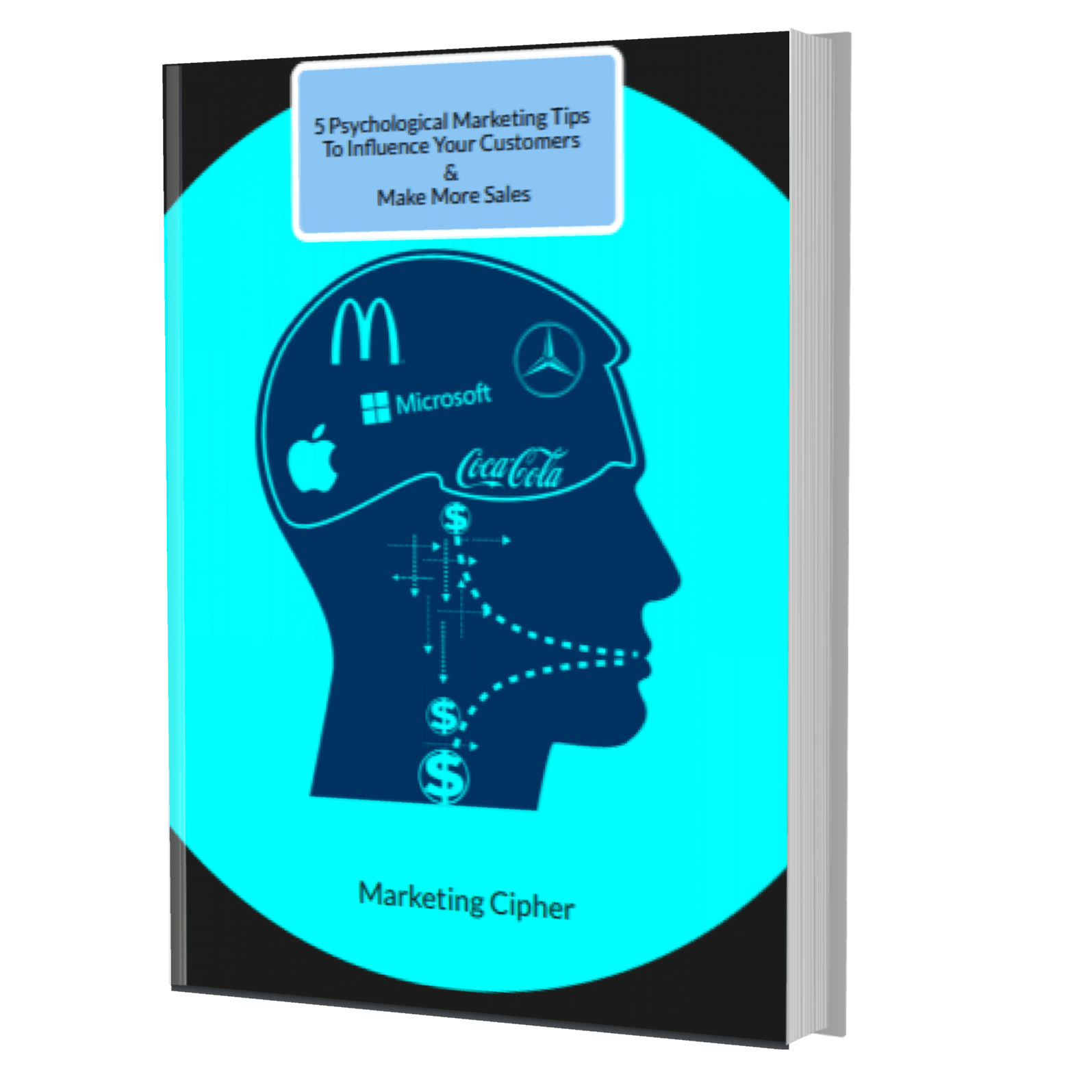
"5 Psychological Marketing Tips To Influence Your Customers & Make More Sales"
Download This Free e-book To Learn How To:
Want More Leads, Traffic, & Sales?
Sign Up For Free Tips & Boost Your Results Now!