
Sign Up For Free Tips So You Can:
Why your website's above-the-fold copy needs to make a promise
A visitor lands on your site and decides within seconds whether to stay or leave. That tiny window of judgement happens entirely above the fold, before they scroll, before they click, before they learn anything about your offer. The text sitting in that prime real estate carries the heaviest conversion weight on the entire page, yet many businesses treat it like a slogan rather than a commitment.
In Australia, where mobile browsing on the train or the tram in Sydney and Melbourne is part of daily life, attention is even harder to capture. A generic headline won't cut through. The copy in your hero section has to do real work: it must promise a specific outcome that the reader actually wants. Get that promise right, and the rest of the page becomes easier to read. Get it wrong, and no amount of design polish will save you.
The first three seconds shape every click that follows
Research consistently shows that users form an impression of a website in roughly three seconds. During that sliver of time, the eye scans the headline, the subheading, and any supporting visuals. If nothing in that initial sweep answers the unspoken question "what's in this for me?", the visitor is gone. The promise you make above the fold acts as a filter: it either invites the right people in or pushes them away.
This is why the hero section isn't a branding exercise. It's a transactional handshake. You're telling the visitor, in plain language, that you understand their problem and can solve it. Without that clarity, the rest of the page is just decoration. With it, every other element on the page gains persuasive power.
A promise is not a tagline
There's a common confusion between a promise and a tagline. A tagline is a catchy phrase designed to stick in memory; a promise is a specific outcome delivered to a specific person. "Quality you can trust" is a tagline. "Cut your monthly accounting time in half" is a promise. One is forgettable, the other is actionable.
The strongest above-the-fold copy commits to something tangible. It names the benefit, hints at the mechanism, and respects the reader's intelligence. Vague phrases like "solutions for modern businesses" or "innovative digital experiences" fail because they could apply to almost any company in any industry. A real promise narrows the field and signals relevance instantly.
How Australian audiences scan and judge
Australian consumers are direct. They appreciate frankness and quickly tune out corporate fluff, especially when browsing on their phones during a commute or between meetings. With mobile penetration among the highest in the world and NBN connections shaping how households shop, the average Sydneysider or Brisbanite expects a site to load fast and get to the point.
Local businesses, from a boutique winery in the Barossa Valley to a tradie service in Western Sydney, compete in a crowded market where trust is built through specificity. Visitors want to know whether you service their suburb, whether you understand their seasonal needs, and whether your offer applies to them. A hero section that addresses those details directly will outperform a generic pitch every time. For businesses looking to refine their approach, the marketing resource library offers practical guides grounded in these realities.
Where most above-the-fold copy goes wrong
The most common mistake is leading with features instead of outcomes. "We use AI-powered analytics" tells the visitor nothing about what they'll gain. Another pitfall is stuffing the hero with so many claims that the main message disappears. If a reader can't summarise your offer in one sentence after reading your headline, the copy has failed.
A third issue is ignoring the visitor's pain point entirely. When the hero section describes the business rather than the customer's problem, the page feels like a brochure rather than a solution. For a deeper look at how headlines can connect with what readers actually struggle with, this pain point headline breakdown explains the mechanics of leading with relevance.
Sharper recommendations for your hero copy
- Lead with the specific result the visitor wants, not the service you provide
- Use plain Australian English; avoid jargon and Americanised phrasing
- Address a named problem or audience in the subheading to deepen relevance
- Keep the primary promise to under twelve words for mobile readability
- Add a single, obvious next step that matches the promise made above
Make the promise worth keeping
Your above-the-fold copy is the contract you sign with every visitor before they've given you a second of their time. Treat it like a handshake that has to mean something, not a slogan that sounds nice. Rewrite your hero section today with a specific outcome in mind, test it against your current version, and watch how the metrics respond.
If you're ready to sharpen every element of your site, grab the free ebook at Marketing Cipher and subscribe for weekly conversion tactics. Better hero copy is one of the lowest-cost, highest-return changes you can make, and the sooner you start, the sooner your traffic begins to convert.
Expert Marketing Tips & Tricks
We will share with you the latest tips and tricks from proven marketing experts:
- Dominate your target market
- Write powerful sales copy that converts
- Learn traffic secrets to attract unlimited leads
- Create Irresistible offers
- Grow your email list
Get FREE Marketing Tips So You Can Grow Your Online Business
Check Out Our Latest Posts
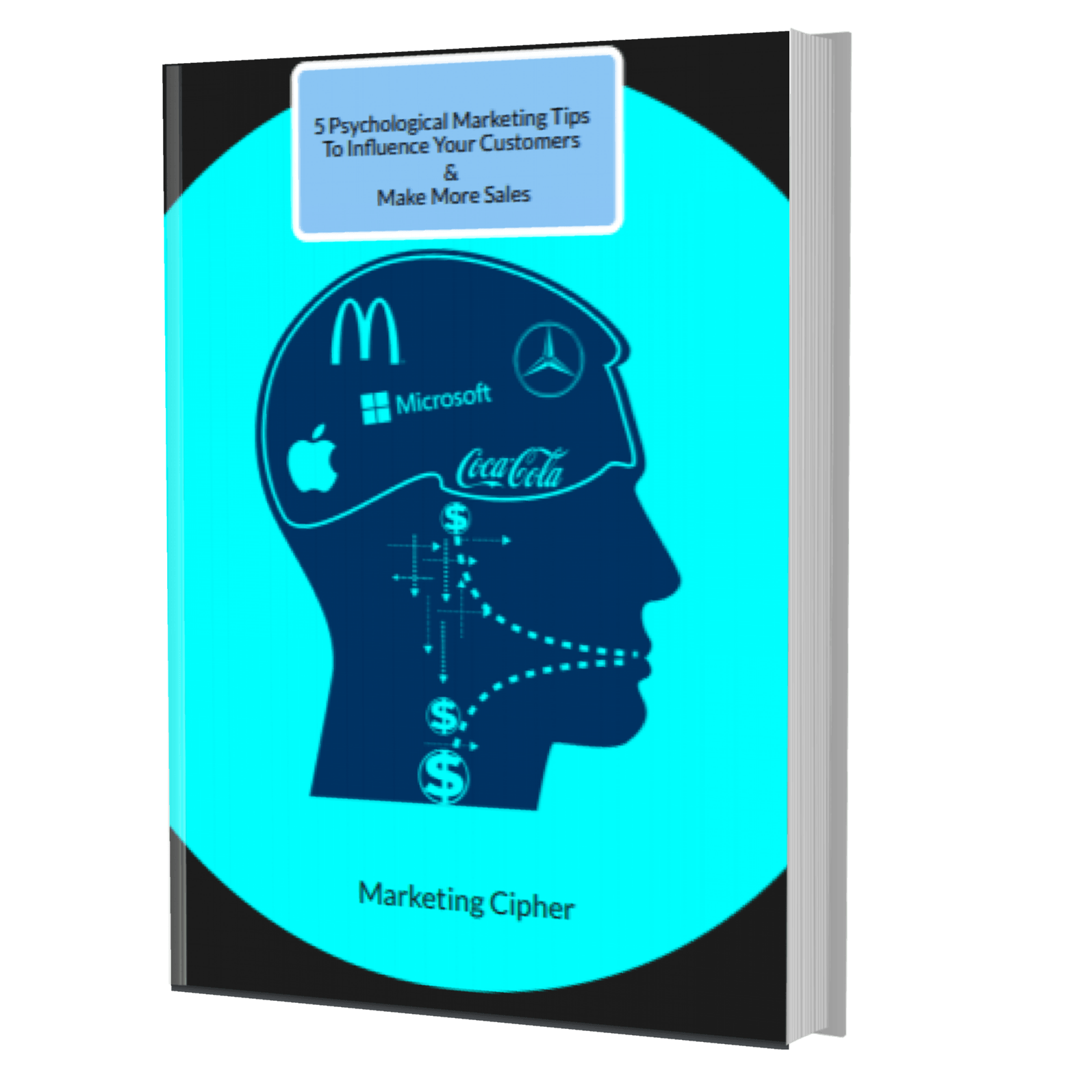
Get Your FREE Gift
"5 Psychological Marketing Tips To Influence Your Customers & Make More Sales"
Download This Free e-book To Learn How To:
Want More Leads, Traffic, & Sales?
Sign Up For Free Tips & Boost Your Results Now!