
Sign Up For Free Tips So You Can:
The Psychology Of Bundling And Higher Average Order Value
Customers rarely evaluate products in isolation. They judge the complete offer: how useful it feels, how much effort it saves, and whether the price seems reasonable for the outcome. Product bundling uses these judgments to make a larger purchase feel more convenient and valuable.
A well-designed bundle can increase average order value without relying on aggressive discounts. It combines complementary products, reduces decision fatigue, and gives shoppers a clearer path toward solving a specific problem. The psychological effect is powerful because buyers are choosing an outcome rather than adding random items to a cart.
Bundles Create A Stronger Value Perception
The first psychological advantage of bundling is value compression. When several related products appear together at one price, customers compare the total usefulness of the package with its cost. They often perceive a larger gain than they would from purchasing each item separately.
This effect becomes stronger when the bundle has a clear purpose. A “Home Office Starter Kit” communicates more than a collection of unrelated accessories. It promises a finished solution, which makes the offer easier to understand and gives customers a reason to increase their order size.
Bundling can also make savings more visible. Showing the individual prices beside the package price helps shoppers recognize the economic benefit, provided the original prices are genuine and the discount does not undermine perceived quality.
Convenience Reduces Decision Fatigue
Every additional choice creates friction. A customer who must select compatible products, determine quantities, and research which options work together may delay the purchase or abandon it entirely. A bundle removes much of that mental workload.
This is especially useful for beginners and time-sensitive buyers. Someone purchasing camera equipment, skincare, software, or business tools may appreciate an expert-selected combination because it reduces uncertainty. The bundle acts as a recommendation, guiding the buyer toward a sensible decision.
Convenience is also a form of perceived value. Customers are paying for saved time, fewer mistakes, and a smoother buying experience. Positioning a package around these benefits can be more persuasive than focusing on a percentage discount alone.
The Right Combination Encourages More Spending
The best bundles include products that naturally support one another. A core item can be paired with accessories, upgrades, replenishments, or services that improve its performance. These additions feel relevant rather than opportunistic.
For example, a fitness brand might pair resistance bands with a workout guide and recovery product. A marketing software company could combine an email platform, automation templates, and analytics training. The customer spends more, but the offer also becomes more complete.
| Bundling Approach | Customer Motivation | Best Use |
|---|---|---|
| Complementary products | “These items work better together” | Accessories and add-ons |
| Curated solution | “This solves my whole problem” | Beginner-focused offers |
| Tiered package | “I can choose the right level” | Software and services |
| Volume bundle | “The unit price improves” | Consumables and repeat purchases |
| Premium package | “I receive superior results or access” | Coaching and high-ticket products |
A useful bundle should increase relevance as well as revenue. If the extra items seem unrelated, customers may assume the seller is trying to clear inventory. Relevance protects trust and helps the higher price feel justified.
Anchoring Makes The Package Feel More Valuable
Price anchoring influences how shoppers interpret an offer. When customers see that individual products would cost more than the combined package, the bundle price becomes a reference point for savings. The perceived deal can make a larger transaction feel financially responsible.
The anchor must be credible. Inflated comparisons can create suspicion, particularly among informed buyers. Use clear pricing, honest savings, and concise explanations of what each component contributes.
Social proof can reinforce the anchor by showing that other customers have benefited from the complete package. Reviews that mention convenience, results, or the usefulness of specific components are especially effective. Marketers can also study social proof strategies when building evidence around a bundled offer.
Scarcity And Commitment Strengthen The Decision
A limited-time bundle can create urgency, but scarcity works best when it has a believable reason. A seasonal package, launch promotion, or bonus available until a specific date gives customers a clear reason to act now.
Bundling can also benefit from the commitment effect. Once buyers select a package that represents a goal, they are psychologically invested in completing that goal. A language-learning bundle feels like a commitment to fluency; a business growth package feels like a commitment to acquiring customers.
This is why messaging should describe the desired transformation. Focus on the organized workspace, completed project, healthier routine, or improved campaign rather than simply listing every item inside the package. The more clearly the bundle represents progress, the easier it is to justify.
Design Bundles That Sell Without Confusion
Begin with customer intent, not the products you want to move. Review purchase data, customer support questions, and common product combinations to identify what people already use together. Natural buying patterns are often the strongest foundation for a package.
Then select a primary product and add components that remove obstacles or improve the final result. Keep the bundle easy to scan, with a concise name, a clear promise, and a visible explanation of the savings or convenience.
- Offer a focused solution instead of a random assortment.
- Use three pricing levels when customers have different budgets.
- Include a small, relevant bonus to increase perceived value.
- Test bundle names, savings language, and product order.
- Track average order value, conversion rate, profit margin, and returns.
A bundle should remain profitable after discounts, fulfillment costs, payment fees, and customer service demands. The goal is profitable order expansion, not revenue that disappears through excessive incentives.
Turn A Larger Cart Into A Better Experience
Bundling succeeds when the customer feels understood. A package that anticipates needs, reduces research, and supports a meaningful outcome can increase order value while improving satisfaction. That combination creates stronger repeat-purchase potential than a forced add-on at checkout.
The same principle applies to digital products and lead-generation offers. A useful B2B lead magnet can introduce a broader bundle of templates, training, and consulting, while understanding why lead magnets fail helps marketers improve the first step of the customer journey.
Use customer behavior and perceived value to shape your next package, then test the offer with real traffic. Download the free Marketing Cipher ebook and subscribe for practical advice on copywriting, consumer psychology, email marketing, and conversion strategies that help turn more interest into sales.
Expert Marketing Tips & Tricks
We will share with you the latest tips and tricks from proven marketing experts:
- Dominate your target market
- Write powerful sales copy that converts
- Learn traffic secrets to attract unlimited leads
- Create Irresistible offers
- Grow your email list
Get FREE Marketing Tips So You Can Grow Your Online Business
Check Out Our Latest Posts
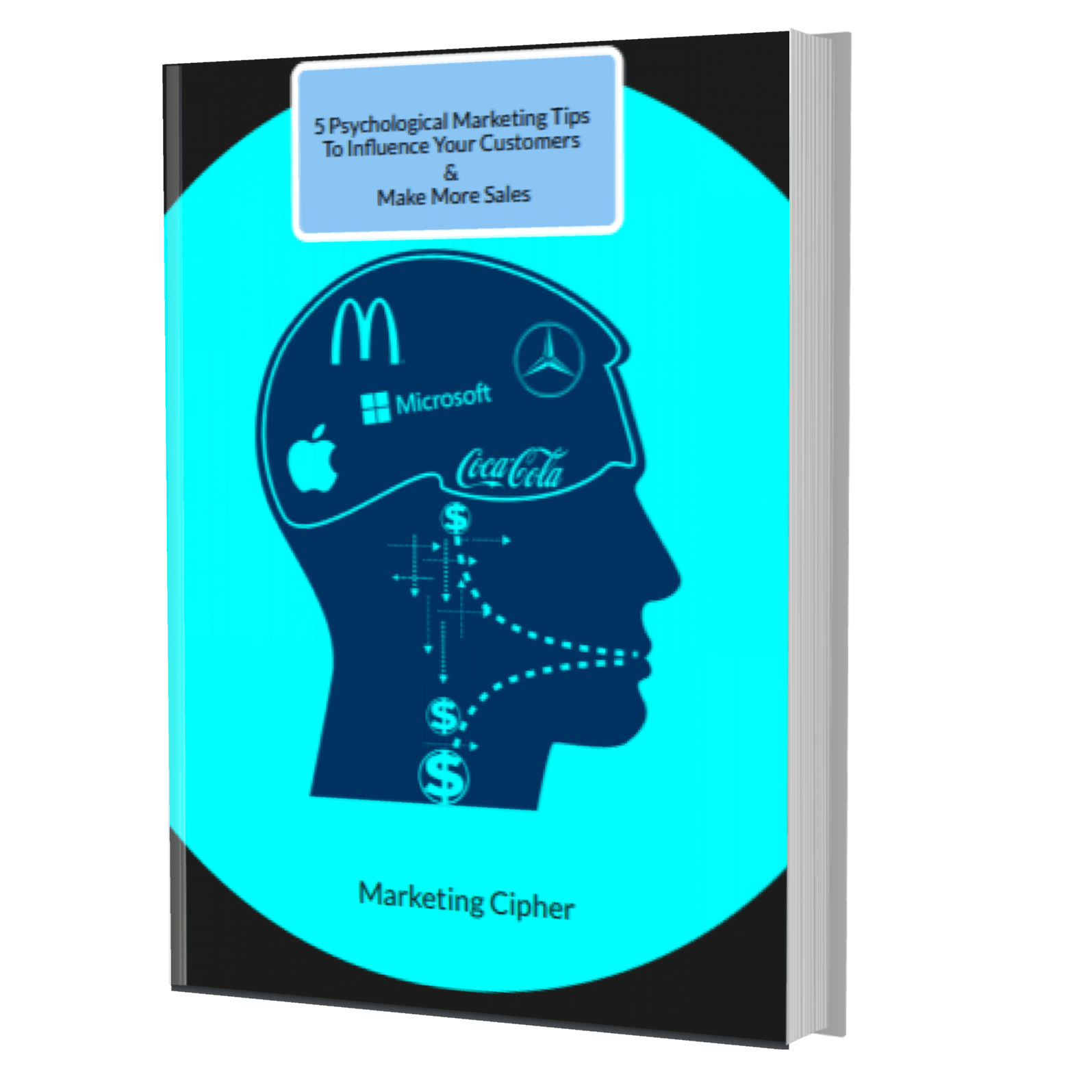
Get Your FREE Gift
"5 Psychological Marketing Tips To Influence Your Customers & Make More Sales"
Download This Free e-book To Learn How To:
Want More Leads, Traffic, & Sales?
Sign Up For Free Tips & Boost Your Results Now!