
Sign Up For Free Tips So You Can:
Loss Aversion Copywriting: Offers Readers Cannot Refuse
Australians are practical buyers. Whether they are scanning an offer between meetings in Sydney's CBD or scrolling through their phones on a tram through Melbourne, the average reader makes a decision in seconds. The marketers who win that split-second battle understand a quiet truth about human behaviour: people are wired to avoid losses more than they are to chase gains.
Loss aversion, the psychological principle first mapped out by Daniel Kahneman and Amos Tversky, suggests that the pain of losing something feels roughly twice as powerful as the pleasure of gaining something of equal value. For copywriters and business owners, that asymmetry is a goldmine. When you frame an offer around what a reader stands to lose by hesitating, you tap into a motivator that runs deeper than discounts or bonuses ever could.
The Psychology Behind Losing More Than Gaining
Before you start rewriting your landing pages, it helps to understand why this principle works so reliably. Prospect theory tells us that humans evaluate outcomes relative to a reference point, often the status quo. If a customer feels they already "have" something, a free trial, a downloadable guide, a reserved spot, taking it away registers as a loss. The brain reacts to that loss with the same urgency it would reserve for a financial hit.
Australian consumers are particularly attuned to perceived value because the cost of living weighs heavily on household budgets. A buyer in Brisbane comparing two coaching programs is not just weighing features; they are weighing what they would forfeit by choosing the wrong one. By writing copy that highlights the gap between their current trajectory and the better outcome they could claim, you make inaction feel expensive rather than neutral.
Framing Your Offer Around What They Stand to Lose
Most sales pages lead with the benefit. "You will save time," they say, or "You will earn more." Effective loss-framed copy does the opposite. It paints a picture of what life looks like without the solution. Six months from now, still stuck with the same headache, the same flatlining email list, the same Sunday-night dread. The reader sees the cost of staying put.
This is not about fearmongering. It is about clarity. In a market as crowded as Australia's, where every business from a Perth accounting firm to a Bondi skincare brand competes for attention, generic promises get ignored. Specific, concrete portrayals of the foregone outcome land harder. Instead of "increase your conversions," try "leave another month of revenue on the table." Same idea, different emotional weight.
Time-Bound Bonuses and Disappearing Value
Urgency is where loss aversion gets a practical edge. When you tell a reader that a bonus, a price, or a spot in a cohort is about to vanish, you turn the offer into something they already feel they own. The deadline becomes a fence around their territory.
Smart marketers pair urgency with genuine scarcity. A genuine 48-hour window tied to a product launch in AEST works better than a fake countdown timer that resets on every refresh. Australians are sceptical of gimmicks, partly because the Australian Competition and Consumer Commission has cracked down on misleading urgency claims for years. Keep your deadlines honest, and the fear of missing out does the heavy lifting for you.
Speed also matters at the page level. If a visitor clicks your ad and waits three seconds for your funnel to load, you have already lost them. Research into casino game loading time shows how every additional second of friction pushes potential buyers away, a lesson that applies just as much to a Sydney SaaS startup as to any high-stakes offer online.
Social Proof That Highlights the Cost of Inaction
Testimonials are usually framed as wins: "This product changed my life!" That works, but a stronger pattern is to highlight what the buyer would have missed. "If I had not joined in March, I would have spent another quarter spinning my wheels" lands differently because it forces the reader to imagine themselves in the same position.
You can pull this off with case studies too. Walk through the before-state in vivid detail, the missed bookings, the abandoned carts, the unanswered DMs, and let the reader feel the weight of that outcome. Pair the story with a clear pivot point where the customer took action, and you have built a miniature before-and-after narrative that sells without sounding salesy.
Writing the Call to Action With Loss in Mind
A weak call to action tells the reader what to do. A strong one reminds them what they will keep or lose by doing it. "Start your free trial" gives a small nudge. "Claim your spot before the welcome bonus disappears" leans on the endowment effect and loss aversion at the same moment.
Body language and tone matter here too. Mirroring in sales copy builds a sense of recognition when you reflect the reader's own phrases back at them. The reader feels understood, and the offer feels like a continuation of a conversation they were already having.
Mistakes to Avoid When Using Loss Aversion
Loss aversion works, but it can backfire. Overdo the doom and gloom, and you will sound like a late-night infomercial. Australians in particular switch off fast when copy feels manufactured, so keep the tone grounded and the claims provable. Vague threats like "you will fall behind forever" undermine credibility.
Watch out for compliance issues too. Under Australian Consumer Law, any urgency or scarcity claim must be truthful. If you say only ten spots remain, ten spots must actually remain. Fake stock counters and false countdowns can draw ACCC attention and erode the trust you have spent months building.
| Gain-Framed Offer | Loss-Framed Offer |
|---|---|
| "Earn an extra 20% in revenue this quarter" | "Stop leaving 20% of your revenue on the table" |
| "Join 5,000 happy subscribers" | "Don't get left behind by the 5,000 already inside" |
| "Get a free bonus when you sign up today" | "Claim your bonus before it expires at midnight AEST" |
| "Start your free trial and explore" | "Reserve your spot before the trial is gone" |
Use the loss-framed column when the reader is already engaged and needs a final push to act. Save the gain-framed language for top-of-funnel content where you are still building desire.
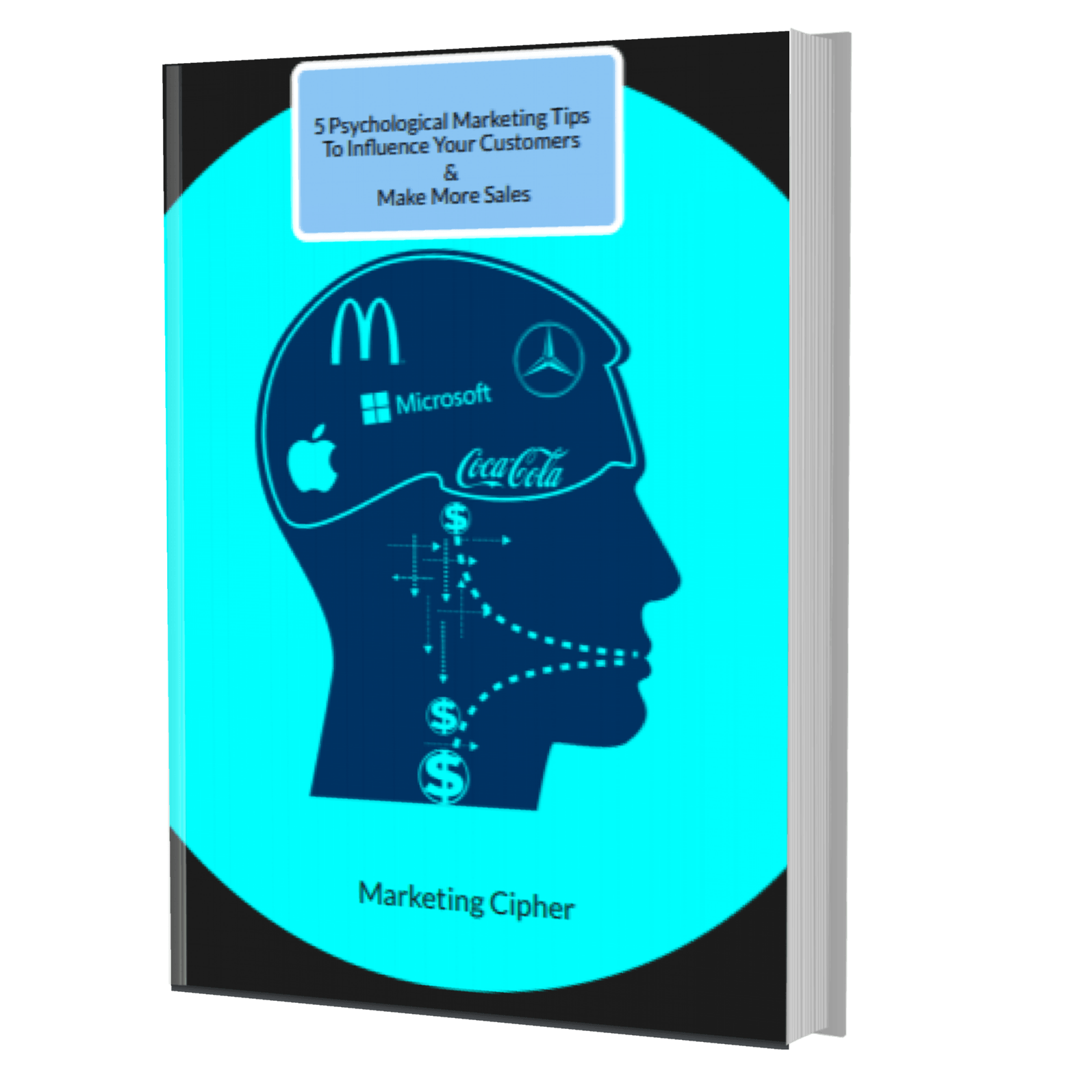
Ready to put these ideas to work? Download the free Marketing Cipher ebook for the full library of loss aversion templates, headline formulas, and offer blueprints. Drop your details into the signup form, and you will also receive weekly marketing breakdowns straight to your inbox, written for Australian operators who want copy that converts without resorting to hype.
Expert Marketing Tips & Tricks
We will share with you the latest tips and tricks from proven marketing experts:
- Dominate your target market
- Write powerful sales copy that converts
- Learn traffic secrets to attract unlimited leads
- Create Irresistible offers
- Grow your email list
Get FREE Marketing Tips So You Can Grow Your Online Business
Check Out Our Latest Posts
Get Your FREE Gift
"5 Psychological Marketing Tips To Influence Your Customers & Make More Sales"
Download This Free e-book To Learn How To:
Want More Leads, Traffic, & Sales?
Sign Up For Free Tips & Boost Your Results Now!